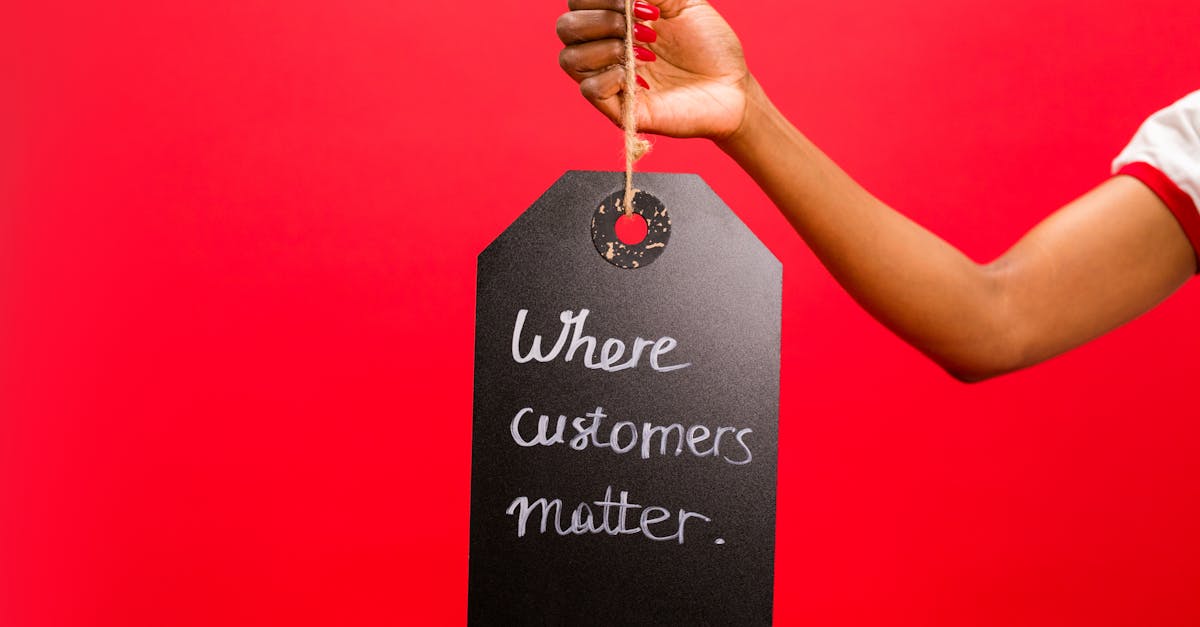
The Importance of Customer-Focused Marketing: Putting People at the Heart of Your Business
1. Introduction: Why Customer-Focused Marketing Matters More Than Ever
Have you ever walked into a coffee shop where the barista remembers exactly how you like your latte? It feels great, right? That moment of recognition makes you feel valued as an individual, not just another transaction in the register. That is the essence of customer-focused marketing. In a world where we are bombarded by thousands of ads every single day, the businesses that stand out are not necessarily the ones with the loudest voice or the biggest budget. They are the ones that actually care about the person on the other end of the screen.
2. What Exactly Is Customer-Focused Marketing?
Customer-focused marketing is not just a fancy buzzword to put on a slide deck. It is a fundamental strategy where every decision, from your brand voice to your product features, is filtered through the lens of what the customer actually needs and wants. Think of it as shifting your gaze from the mirror to the audience. Instead of asking, “How can I sell more of this product?” you start asking, “How can I make my customer’s life easier or more enjoyable today?”
3. The Paradigm Shift: From Product Centric to People Centric
In the past, marketing was about the “four Ps” of product, price, place, and promotion. You built something, you put a price tag on it, and you shouted about it until someone bought it. But the internet changed the power dynamic. Customers now have endless choices and the power to research everything. If you are still pushing products instead of solving problems, you are essentially trying to sell ice to someone who is already shivering.
4. Why Customer-Focused Marketing Is Your Secret Weapon
When you stop viewing your customer as a wallet and start viewing them as a partner, the entire relationship changes. It is the difference between a one night stand and a long term marriage.
4.1 Building Long Term Trust and Loyalty
Trust is the currency of the modern economy. When you show your customers that you understand their pain points and are genuinely invested in their success, you stop being a vendor and start being a resource. Loyal customers are far more likely to forgive a small mistake than someone who has no emotional connection to your brand.
4.2 Achieving Higher Customer Lifetime Value
It costs way more to acquire a new customer than it does to keep an existing one. By focusing on your current audience, you increase their lifetime value. They buy more, they refer friends, and they become a community of brand ambassadors who do your marketing for you for free.
5. The Psychology Behind the Strategy: Making Them Feel Seen
At our core, humans want to be heard. We are biologically wired to gravitate toward people and brands that resonate with our personal identity. When a brand anticipates a need before we even ask for it, it triggers a sense of relief and connection. It is not magic; it is psychology. It is about removing the friction from their day and making them feel like the hero of their own story, while your product acts as the helpful guide.
6. Balancing Data with Human Empathy
Data tells you the “what,” but empathy tells you the “why.” You cannot run a business on intuition alone, but you also cannot run it on spreadsheets alone.
6.1 Using Data the Right Way
Use your analytics to spot patterns in behavior. If customers consistently drop off at the checkout page, do not just stare at the chart. Ask yourself what is confusing them. Are the shipping costs hidden? Is the process too long? Data provides the clues, but your empathy provides the solution.
6.2 The Dangers of Over Automation
We love automation because it saves time. However, there is a fine line between efficiency and sounding like a soulless robot. If every email you send starts with “Dear Valued Customer,” you are losing the human element. Automation should be the foundation, not the entire house. Always leave room for genuine human interaction.
7. Mapping the Modern Customer Journey
The journey is rarely a straight line anymore. It is a messy, winding path that spans social media, email, blogs, and physical storefronts.
7.1 From Awareness to Advocacy
Your job does not end when they click buy. The real work begins afterward. How is the onboarding process? Is the support team actually helpful or just reading from a script? Turning a customer into an advocate requires a seamless, delightful experience at every touchpoint.
7.2 Personalization at Scale
Personalization is not just inserting a first name into a subject line. It is about understanding the user’s stage in their journey. If they just bought a camera, do not email them a discount for another camera. Email them tips on how to take better photos or offer them a discounted lens. That is helpful marketing.
8. How to Implement a Customer-First Approach Today
Start small. Survey your current customers. Ask them what they love and what drives them crazy. Look at your support tickets for common complaints. Create a feedback loop where the marketing team actually talks to the people who are using the product every day. If your marketing team is disconnected from the support team, you have a massive blind spot.
9. Common Pitfalls to Avoid
One major mistake is assuming you know what your customer wants without ever asking. Another is trying to be everything to everyone. You cannot be the perfect brand for every single person. Identify your core audience and obsess over them. If you try to please everyone, you end up pleasing no one.
10. Measuring Success Beyond Sales Figures
Look at your Net Promoter Score, your churn rate, and the quality of your social media engagement. Are people just clicking, or are they talking to you? High sales are great, but high sentiment is better. Sentiment is what protects your brand during a crisis.
11. Future Trends in Customer Experience
Expect to see more conversational marketing and AI-driven assistance that feels increasingly human. The brands that win will be the ones that use technology to reduce wait times and improve accuracy, while maintaining a warm, approachable tone. The human connection will always be the premium tier of service.
12. Conclusion
At the end of the day, customer-focused marketing is about being a decent human being in a digital space. It requires listening more than you speak and solving problems rather than just pushing products. When you shift your focus from your own bottom line to the success and happiness of your customer, the sales will naturally follow. It is a long game, but it is the only way to build a brand that lasts in a world that changes faster than we can blink. Start small, be authentic, and keep putting your people first.
13. Frequently Asked Questions
1. What is the most important part of customer-focused marketing?
The most important part is deep empathy. You have to genuinely understand the challenges your customers face so you can provide real, tangible value rather than just noise.
2. How do I balance automation with personalization?
Use automation to handle repetitive tasks like sending welcome sequences or receipts, but inject human oversight into your communication. Ensure your automated messages sound conversational and leave room for real people to step in and assist.
3. Does customer-focused marketing cost more?
It may require more time and effort upfront to build relationships, but it is actually more cost-effective in the long run. Retention is significantly cheaper than acquisition, so a customer-first approach is an investment in stability.
4. How can I get my team on board with this approach?
Start by sharing customer feedback with everyone in the company, not just the marketing team. When developers and executives hear directly from customers about their pain points, it creates a culture where everyone feels responsible for the user experience.
5. Is it possible to be too customer-focused?
Yes, if you lose your brand identity in the process. You want to be helpful and responsive, but you should still lead with your brand’s unique vision and values. You are not a servant; you are a partner to your customer.